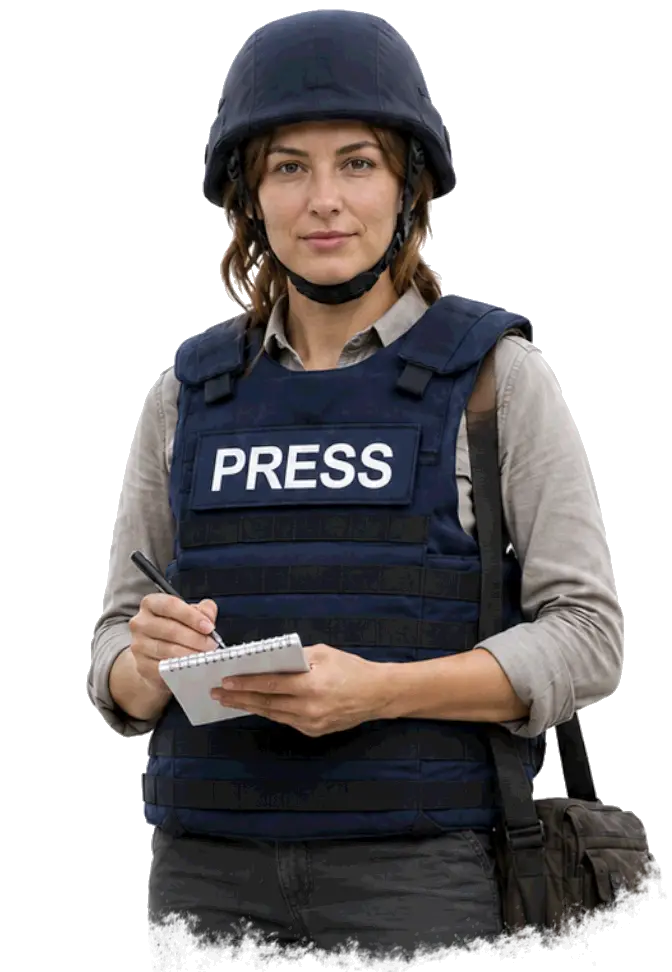

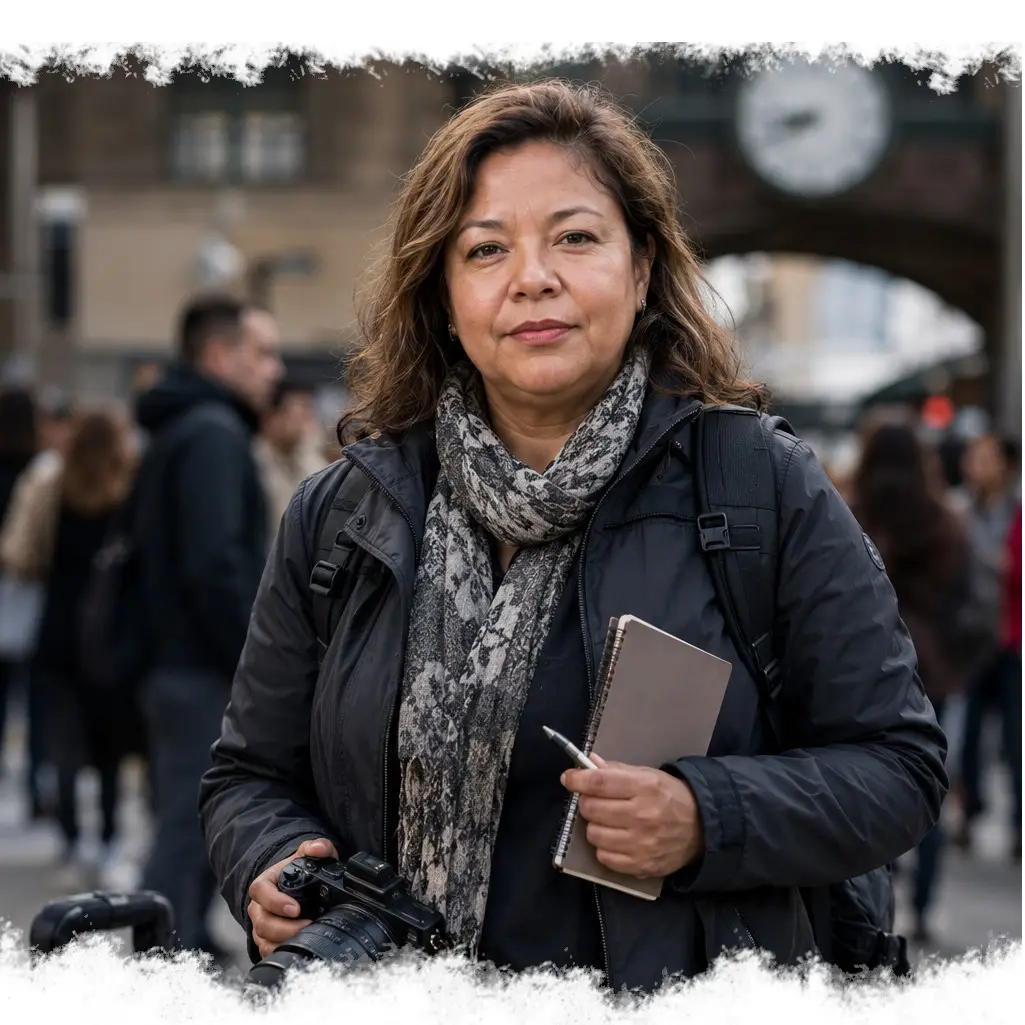


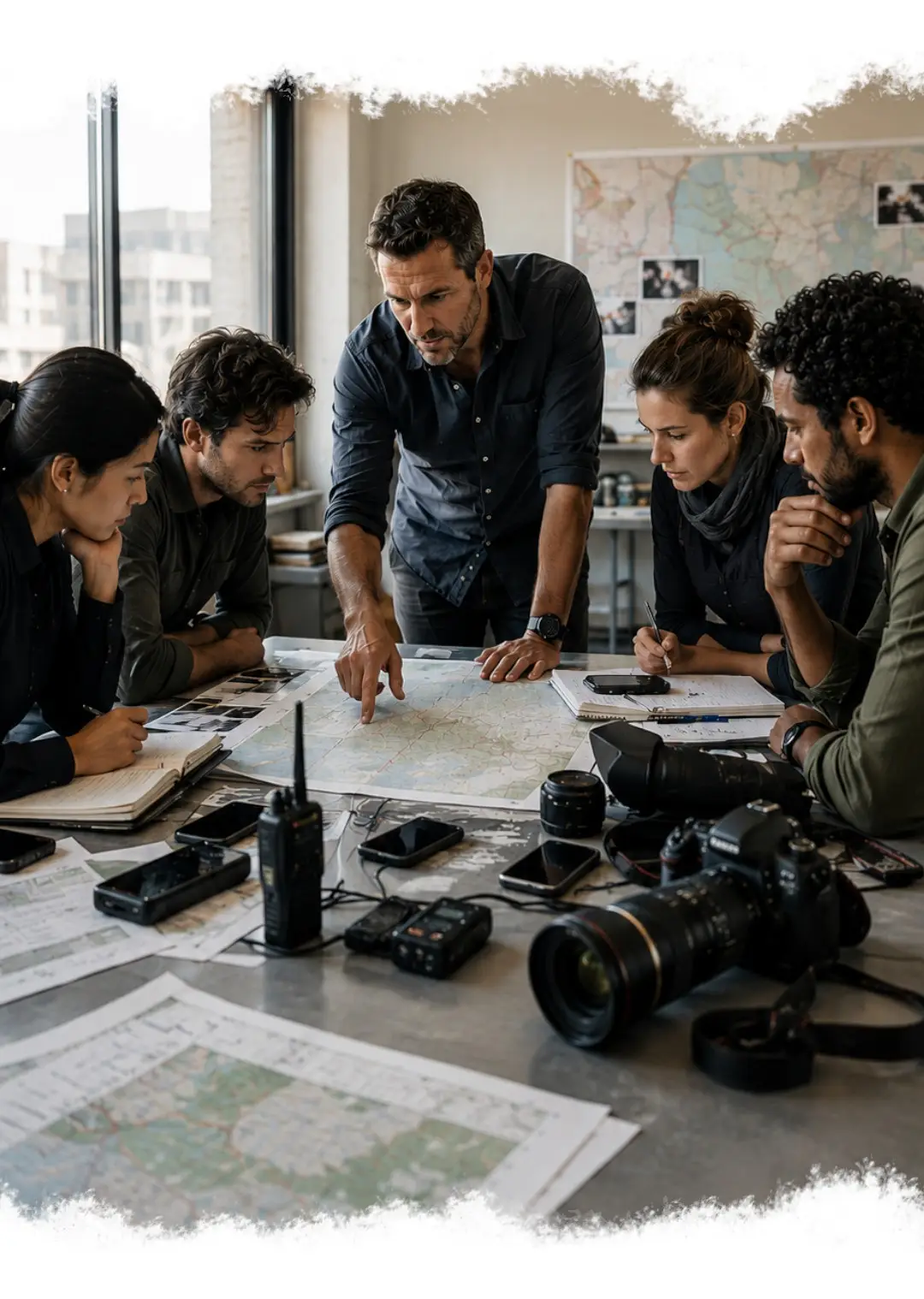
The News Media Safety Course is an online training programme designed to help journalists develop the knowledge, understanding, and decision-making skills that support safer news gathering.
Designed for staff journalists, freelancers, producers, and media teams, the programme provides organisations with a practical and scalable way to deliver meaningful safety training before deployment. Participants develop the understanding required to recognise risk, make better decisions, and operate more effectively in complex environments.
News organisations regularly assign journalists to tasks that involve elevated levels of risk, responsibility, and independent decision-making. Yet providing meaningful safety training consistently across staff journalists, freelancers, producers, and media teams can be challenging.
The result is an uneven picture of capability across the workforce. Some journalists arrive well prepared, while others may have little formal training despite being exposed to similar risks and responsibilities.
The News Media Safety Course was developed to provide a practical and scalable training pathway, helping organisations build a stronger foundation of knowledge, understanding, and decision-making across their teams.
The News Media Safety Course helps organisations build a stronger foundation of knowledge, understanding, and decision-making across their workforce. Different stakeholders benefit in different ways, but the objective remains the same: safer news gathering through better preparation.
The course helps journalists develop a deeper understanding of planning, risk, and safer news gathering so that they can make better decisions before, during, and after assignments.
The course provides freelancers with access to structured safety training that they may not otherwise receive, helping them develop the knowledge and understanding required to operate more safely during assignments.
The course provides a practical and cost-effective way to deliver meaningful safety training across a larger portion of the workforce, helping news safety leaders build capability consistently and quantify competency more objectively.
The course helps organisations demonstrate that reasonable steps have been taken to prepare journalists for the environments they may encounter, supporting duty of care responsibilities while enabling operational and editorial objectives.
We believe safer journalism begins long before a journalist arrives on location.
Safer journalists identify and mitigate risk. They understand that risk cannot always be avoided, but it can often be recognised, reduced, and managed.
Safer journalists plan effectively. They consider the assignment, the environment, and the challenges they may encounter before the task begins.
Safer journalists recognise when conditions change. They maintain situational awareness and adapt their decisions as information, circumstances, and risk evolve.
Safer journalists understand their limitations and know when to ask for support. They recognise when additional information, experience, or specialist advice is required.
“Good decisions are rarely made for the first time in the field.”
The News Media Safety Course was developed around these principles, helping journalists build the knowledge, understanding, and decision-making skills that support safer news gathering.
Develop a stronger understanding of how risk affects news gathering activities and how it can be recognised, reduced, and managed.
Learn practical approaches to planning and preparation that support safer assignments and more informed decision-making.
Build confidence in the decisions made before, during, and after assignments through a better understanding of risk and its implications.
Safer journalism requires more than awareness of risk. It requires the ability to recognise hazards, prepare effectively, and make informed decisions when circumstances change.
The News Media Safety Course develops the knowledge, understanding, and judgement that support safer news gathering before, during, and after deployment.
The News Media Safety Course is delivered entirely online and designed to provide accessible, scalable safety training for journalists and media teams.
The programme consists of approximately 30 hours of learning delivered across 25 modules, helping organisations build a stronger foundation of knowledge, understanding, and decision-making across their workforce.
A comprehensive programme covering the knowledge, understanding, and decision-making skills that support safer news gathering.
Flexible online learning designed to fit around assignments, workloads, and professional commitments.
Assessment is built into every stage of the programme to reinforce learning and confirm understanding.
Successful candidates receive certification demonstrating completion of structured learning and assessment.
Delegates have six months to complete the programme, allowing learning to be completed alongside operational commitments.
Certification remains valid for two years, helping ensure knowledge remains current and relevant.
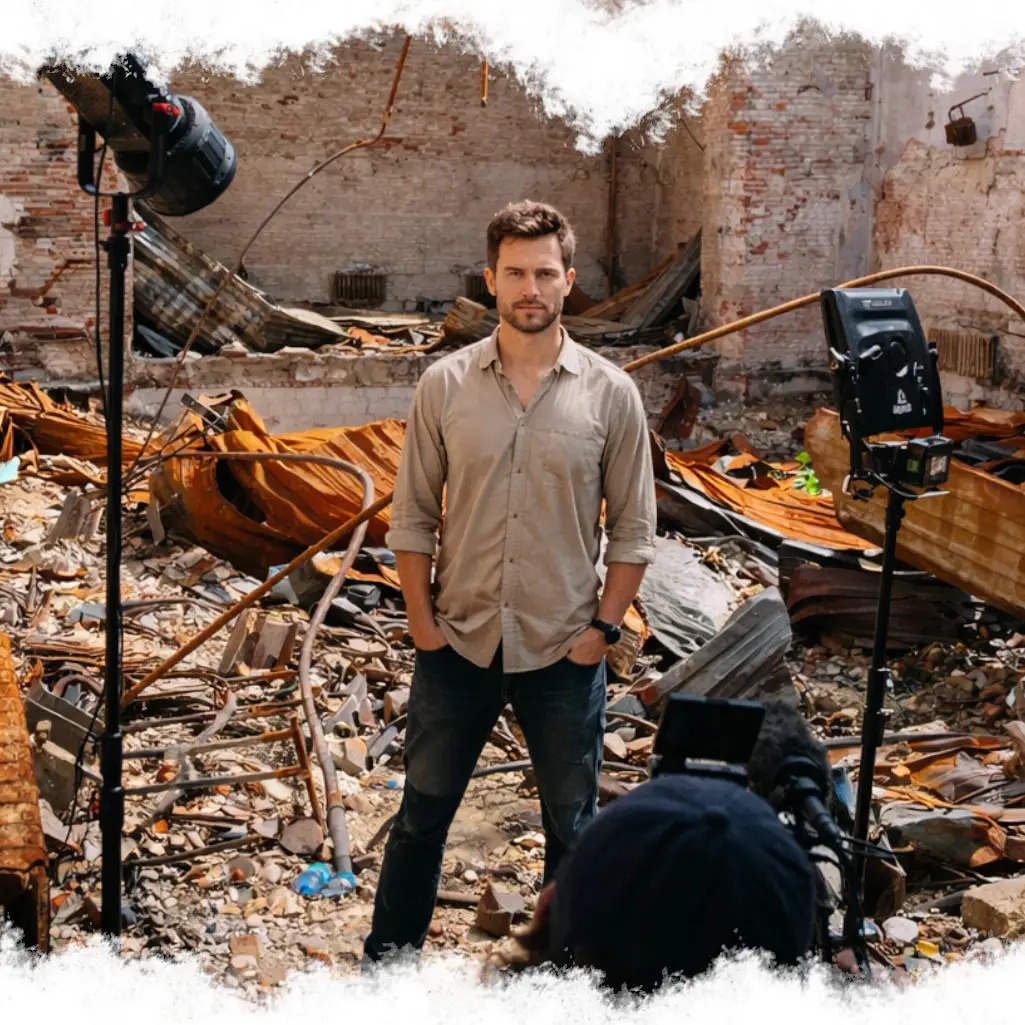
The News Media Safety Course is not intended to replace practical medical training and does not provide a recognised first aid or pre-hospital care qualification.
For organisations that require it, and by request only, the programme can include an introductory medical awareness element that explores the principles of emergency response and casualty management. This content is intended to provide a basic understanding of the subject and should not be considered a substitute for hands-on training, practical experience, or formal medical qualifications.
Where journalists are expected to operate in environments where medical support may be limited, organisations should consider appropriate practical medical training separately.
Explore the eight learning areas that make up the CNMSA programme.
Scroll through the cards below to see the topics covered within each section.
Modules covered:
Modules covered:
Modules covered:
Modules covered:
Modules covered:
Modules covered:
Modules covered:
Modules covered:
CNMSA is designed to be accessible to both new and experienced professionals. Whether you’re entering the media safety profession or building on existing experience, the programme provides a structured pathway for developing role-specific knowledge and understanding.
THIS COURSE IS NOT A REPLACEMENT FOR HEAT OR HEFAT TRAINING. IT PROVIDES THE KNOWLEDGE, UNDERSTANDING, AND DECISION-MAKING FRAMEWORK THAT HELPS JOURNALISTS GAIN MORE FROM IT.
That’s why the News Media Safety Course places such a strong emphasis on understanding risk, effective preparation, and operational judgement before journalists arrive in the field.
Whether you’re preparing for future assignments, supporting freelance contributors, or looking to strengthen safety capability across your organisation, the News Media Safety Course provides a practical and scalable approach to developing safer news gathering behaviours.